To outgrow your world is to break its heart and your own, a little. It is never simple. It is freedom and complexity tangled together a delicate rebellion against the soil that shaped your roots. For me, it meant breaking away from certain Maasai customs, especially those that bound women tighter than men. It required the nerves of an outlier to defy.
Tradition has its beauty the warmth of shared stories, the rhythm of familiar songs, the safety of belonging. But it also has its shadow. Too often, tradition is wielded as a tool of control. In my culture, men’s traditions celebrate authority; women’s traditions demand obedience. A man’s word is final, unquestionable. And when a woman dares to question? Violence often follows not as shame, but as something men believe is love.
Yet I know love is not violence. As the Bible says, “Love is patient, love is kind…”
Even in such a system, women find ways to resist. A mother becomes a silent lieutenant guiding her children toward better lives with hands cracked from labor, her voice a whisper under the weight of expectation. Still, she cannot escape the relentless questions: When will you marry? When will you have children? And so, daughters are often led back into the same customs their mothers suffered. How can the blind lead the blind?
As a girl, I was a sponge watching, absorbing, replaying everything. The way my aunt winced when her husband mocked her dreams. The way my mother’s shoulders sagged after hauling water for hours. At night, I’d lie awake, stitching together solutions from the frayed threads of their lives.
Education cracked the door to a wider world. Through school, I read newspapers smudged with ink, tracing stories of women who spoke back. I lost myself in The New Book of Knowledge, its pages whispering of revolutions and lives unlike mine. I began to see the truth: the hollows under women’s eyes, their laughter frayed at the edges all symptoms of disempowerment.
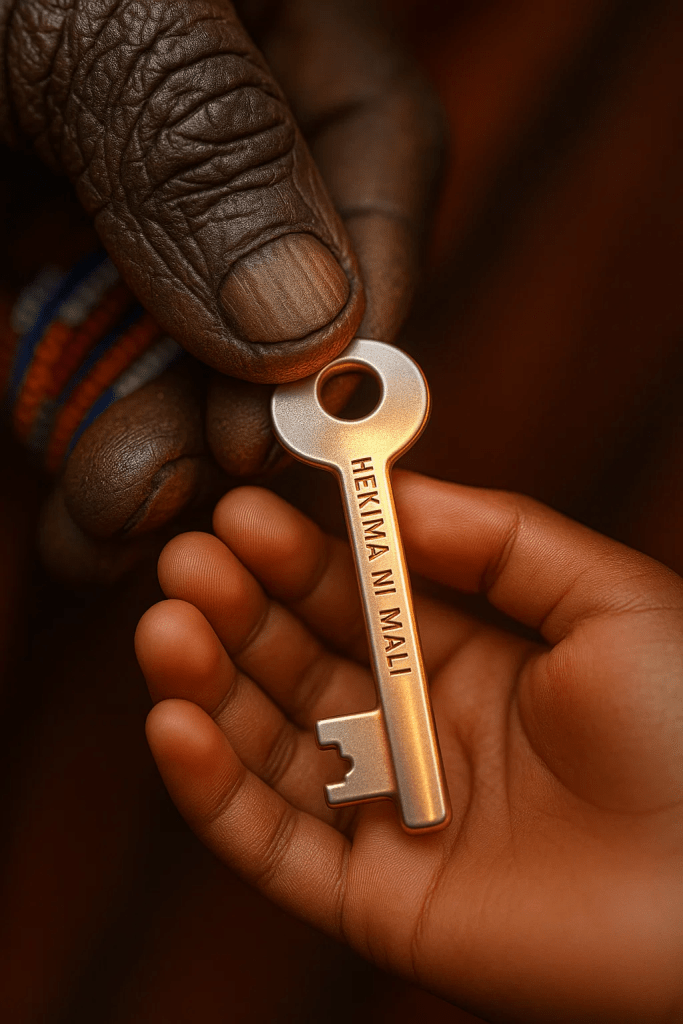
Some women looked at me with admiration for breaking taboos. Others gripped my wrist, their callouses rough against my skin, and warned: Don’t do it unless you must. For many, marriage isn’t just tradition it’s an escape from hunger, from fathers who see them as burdens. But too often, it’s an escape into something worse: from the pan into the fire.
The barriers are layered: lack of funding, financial systems that exclude illiterate women, business models irrelevant to our realities. Add early marriages, reliance on failing rains, and climate change’s chokehold poverty digs its claws deeper unless we act.
Change doesn’t come from pastors’ prayers or rituals. It begins with exhaustion seeing the same wounds passed like heirlooms, the same silence mistaken for strength. It begins when you refuse to inherit the pain.
The “bad fruit” of the family the whispered-about rebel is often the seed of change. Being odd is a blessing. It means freedom to choose: I will not repeat what broke you.
Muthoni in The River Between by Ngugi wa Thiong’o knew this. She danced at the riverbank, claiming both her Christian faith and Gikuyu rites a defiance that cost her life. Yet her choice echoes, reminding us: some rebellions are not for ourselves alone, but for those who will never know our names.
Outgrowing is not betrayal. It is the deepest loyalty to honor your roots by refusing to let them choke you.
So I ask you: What traditions have you outgrown? What chains will you break not just for yourself, but for those who come after?


 The Blooming Maasai
Leave a comment